
What You Will Actually Spend on a Gym Key Fob Setup


What a Gym Key Fob System Really Costs
The cost of a key fob system for a gym is more than the price of the fobs. Budget for readers, door controllers, locks, and installation up front. Then account for software fees, new credentials, and replacements. Lost fobs often carry a $10 to $50 replacement charge. To compare quotes fairly, ask for both the installed price and the annual cost to run the system.
The less obvious cost is staff time. If someone must add every new member, remove every canceled member, and handle every lost fob by hand, a cheap setup can become expensive to run.
I'm Eric A. Speer, owner and CEO of Club Systems, where I've worked with gym management software since 1995. That experience shapes how I assess the cost of a key fob system for a gym: I look at both the access hardware and the work it leaves for your staff.
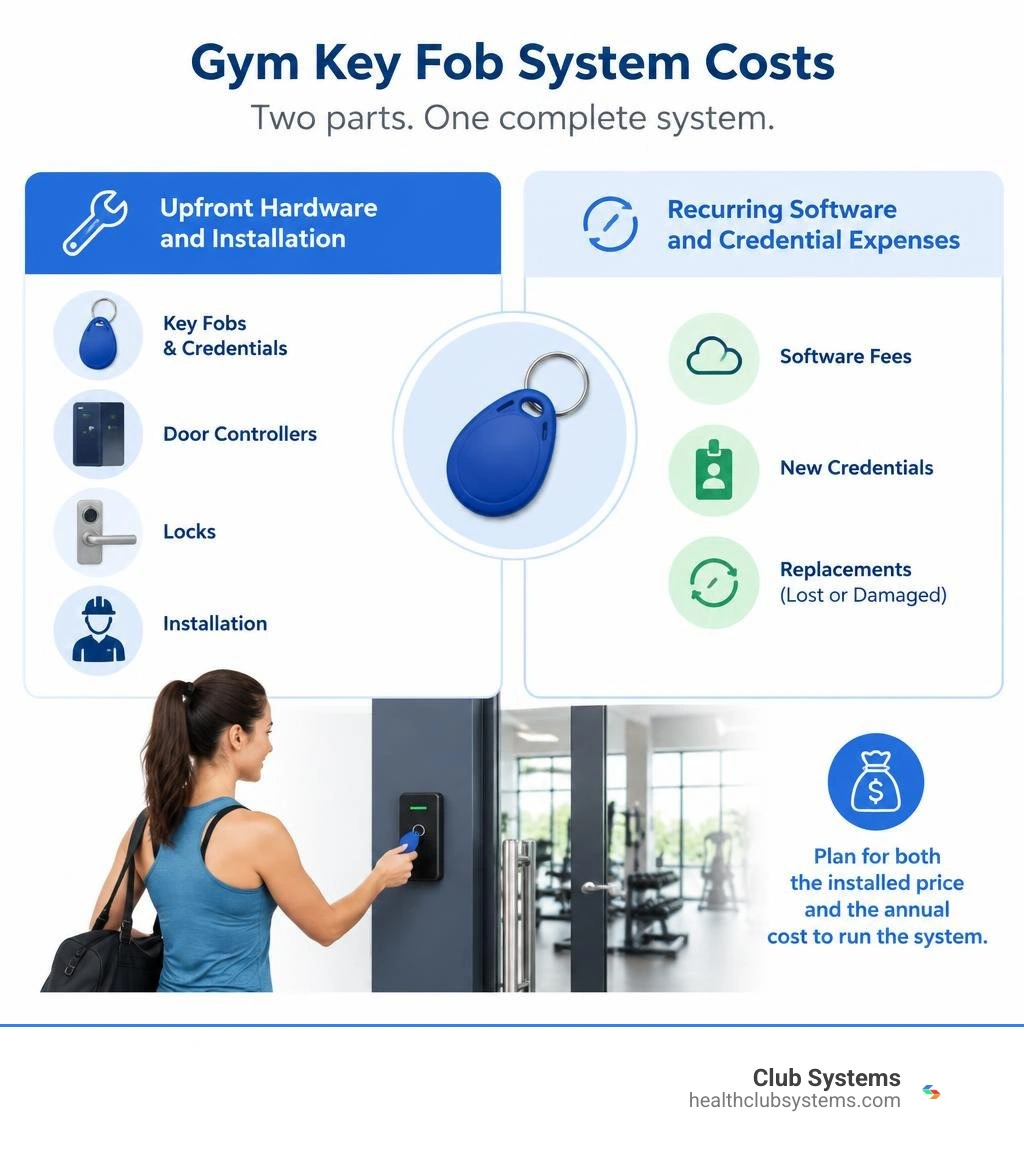
Complete Breakdown of Key Fob System for Gym Cost
When planning a commercial access setup, facility operators often experience sticker shock. A box of key fobs might look inexpensive online, but credentials are only the outer layer of a functioning physical security network.
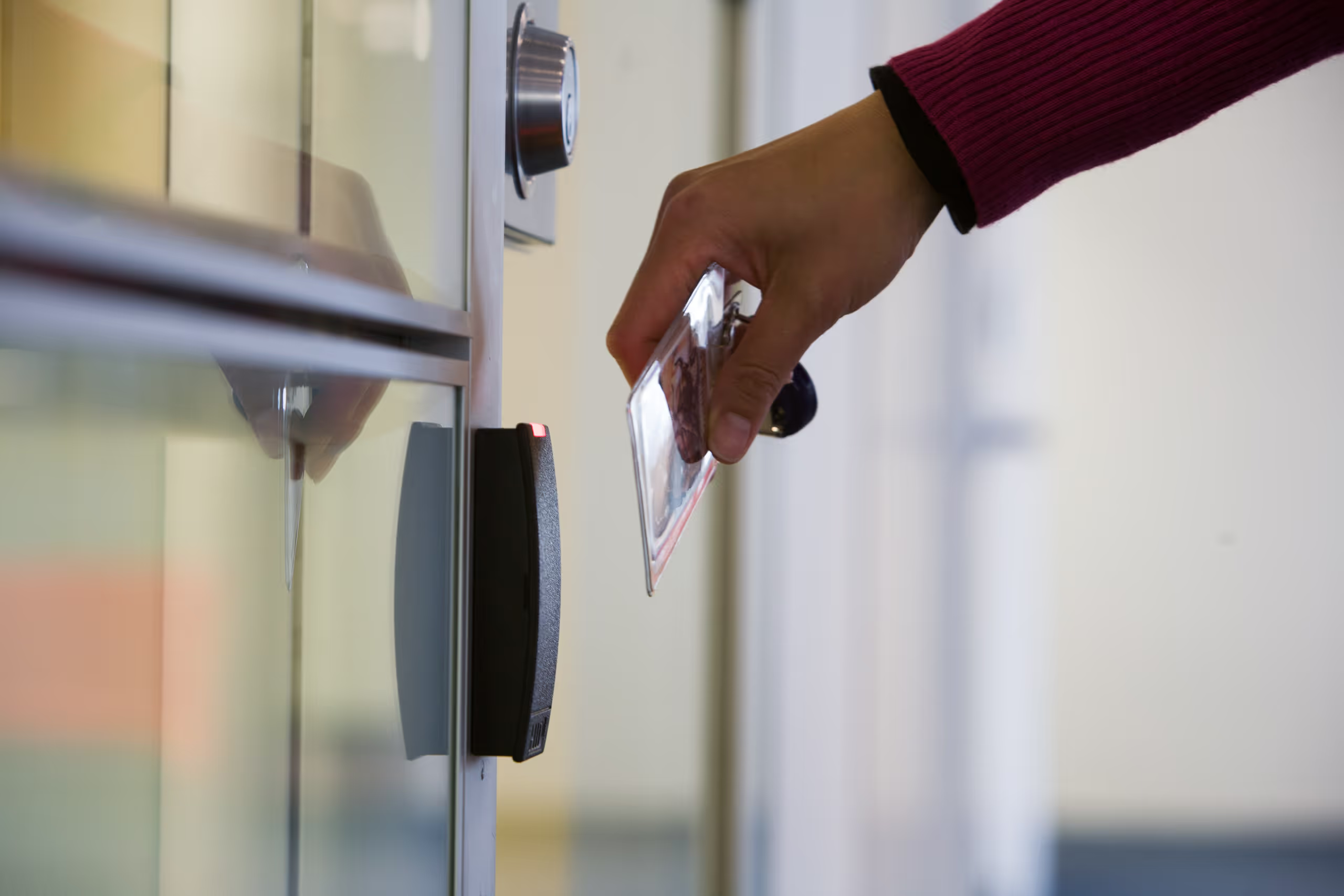
A functional access control deployment consists of four core tiers:
- Perimeter and Locking Hardware: Heavy-duty electric strikes or magnetic locks, door closers, crash bars, and motion sensors.
- Access Control Hardware: Physical proximity readers, keypad units, and centralized door controller boards.
- Provisioning Equipment: Desktop USB readers and encoders used by your front desk to register credentials to member profiles.
- Software and Networking Infrastructure: The underlying management platform, local wiring (Cat6 and low-voltage power), and network integration.
Understanding how these elements interact is the best way to keep your capital expenditures predictable.
How Hardware and Readers Shape Key Fob System for Gym Cost
The physical door hardware represents a significant portion of your upfront investment. For commercial fitness centers, residential amenities, and boutique studios, equipment must withstand continuous daily use.
- Proximity Readers & Keypads: Outdoor or entryway readers generally range from $150 to $450 per door. Standalone commercial keypad and heavy-duty strike lock kits—such as ANSI-rated North American strike lock systems rated for up to 1,000 kg of holding force—often retail around $240 for entry-level hardware.
- Central Door Controllers: The controller is the brain of your entryway. It stores user permissions locally so doors unlock even during internet disruptions. Controller boards capable of managing 1 to 4 doors run anywhere from $400 to $1,500 depending on expandability and onboard memory.
- Desktop USB Encoders: Registering tags manually by typing long hexadecimal numbers invites human error. A dedicated desktop proximity reader sits at your front counter to scan and link tags directly to user profiles in seconds, typically costing around $275.
- Electric Strikes vs. Magnetic Locks: An ANSI-grade commercial electric strike costs between $150 and $400, while magnetic locks (maglocks) run between $180 and $350. Maglocks also require dedicated motion-to-exit sensors and emergency push-to-exit buttons to satisfy local fire safety codes, adding $100 to $200 per opening.
- Professional Installation and Cabling: Low-voltage technicians charge between $75 and $150 per hour. Wiring a standard doorway, cutting into the door frame, and connecting power supplies usually runs between $500 and $1,500 per door in professional labor.
Selecting the right balance of physical components prevents costly retrofits down the line. We dive deeper into matching specific peripherals to your club's floor plan in our guide to hardware configurations for health clubs.
Credential Pricing Across Fobs, Key Cards, and Mobile Access
The physical credentials you distribute to members will vary in cost based on aesthetics, durability, and internal RFID technology.

Credential hardware prices break down across several distinct styles:
- Standard Proximity Key Cards: Flat, printable PVC cards cost roughly $245 for starter packs, scaling up to $1,050 for bulk orders of high-frequency cards.
- Teardrop Style Key Fobs: Compact and durable, teardrop fobs easily attach to keyrings and range from $275 to $1,155 depending on order volume.
- Round Blank Proximity Fobs: Minimalist, unbranded round tags run between $295 and $1,195 across common bundle sizes.
- Custom Branded & Logo Fobs: High-visibility credentials printed with your facility's custom logo range from $255 up to $1,120.
- Specialty Fobs (e.g., Black Diamond Style): Heavy-duty, reinforced aesthetic key tags occupy the premium tier, ranging from $360 to $1,580 for multi-pack allocations.
| Credential Type | Initial Cost (Per 100 Units) | Durability Rating | Member Replacement Rate | Admin Overhead |
|---|---|---|---|---|
| Standard Proximity Card | $120 – $250 | Moderate (bends/cracks in gym bags) | 15% – 25% annually | High (manual printing and encoding) |
| Teardrop / Round Fob | $150 – $300 | High (water-resistant, hard casing) | 10% – 18% annually | Moderate (quick desktop scanning) |
| Custom Branded Fob | $200 – $380 | High (reinforced casing with logo) | 10% – 15% annually | Moderate (quick desktop scanning) |
| Mobile Credential (App) | $0 physical ($1–$3/user license) | Infinite (lives on smartphone) | Near 0% (instant digital reissue) | Very Low (automated provisioning) |
While mobile credentials eliminate physical plastic, research from security leaders like HID reveals that 84% of end users maintain physical credentials alongside mobile access in their deployments. Members lose phones, run out of battery, or prefer carrying a dedicated tag on their keys. A hybrid model ensures nobody gets locked out on the sidewalk.
Calculating the Ongoing Key Fob System for Gym Cost
Upfront hardware is only the initial line item. The operating expenses of an access system determine whether it remains an asset or becomes a balance-sheet drain over three to five years.
Ongoing operating costs generally stem from three categories:
- Access Software Licensing: Door access software subscriptions typically range from $30 to $100 per door each month, or use per-user fees ($1 to $2 per active member) that can escalate rapidly as your facility grows.
- Database Maintenance & Network Support: Maintaining door access infrastructure requires routine database backups, network synchronization, and firmware patch management to keep readers responsive.
- Credential Reissuance Fees: When members misplace fobs, the operational cost includes purchasing replacement stock and paying the administrative wages required to deactivate the old credential and link a new one.
To evaluate how software structures impact long-term profitability, review our detailed breakdown of gym management software pricing models.
Standalone Access vs. Integrated Management Systems
One of the most costly operational mistakes a gym owner or property manager can make is treating door security as an isolated utility.
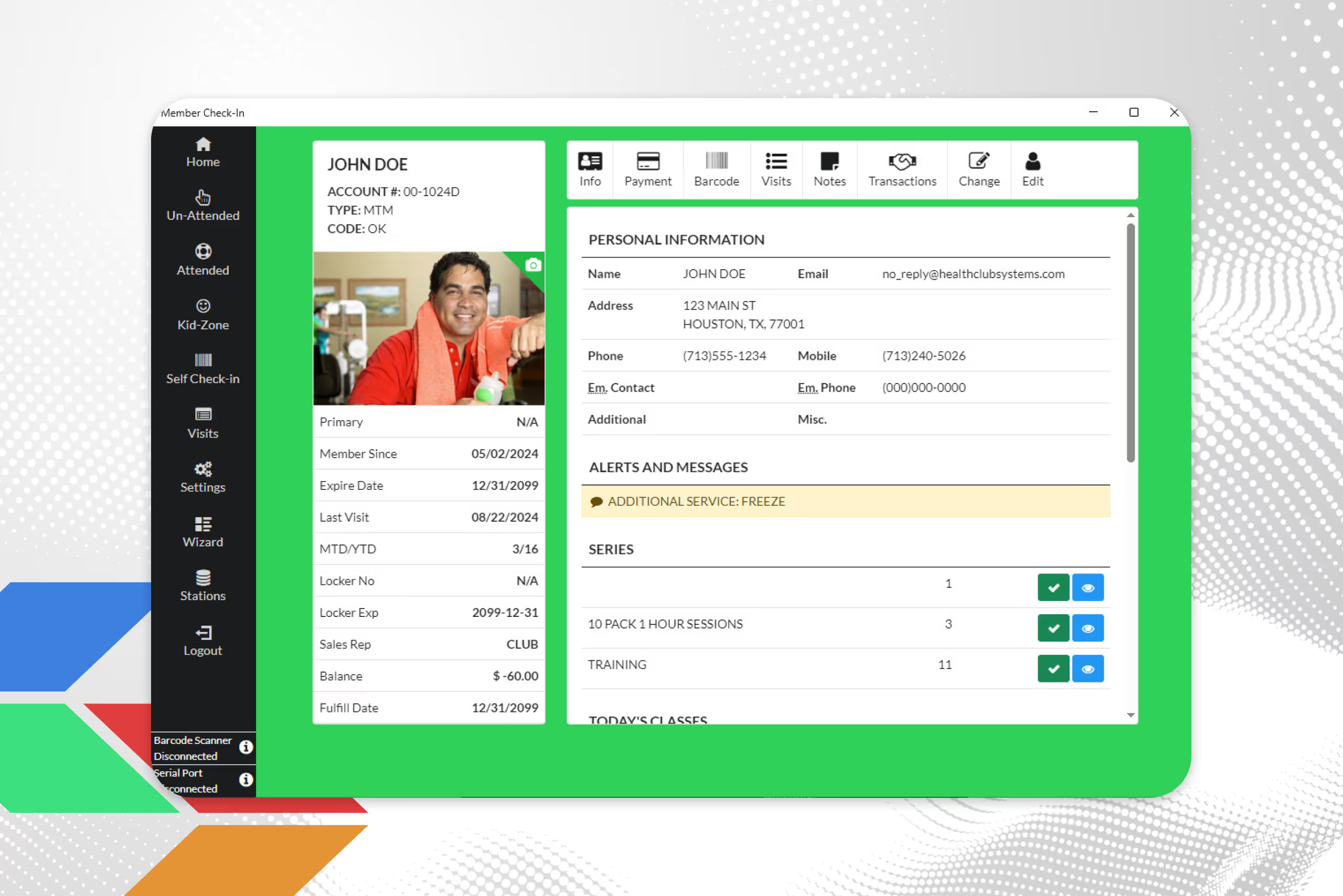
A standalone door controller knows only whether a specific fob number is "active" or "inactive." It does not know if that member's monthly credit card declined, if their contract expired yesterday, or if they just canceled their subscription.
When your access control operates independently from your member management database, your staff must manually maintain two separate systems. Every cancellation, billing failure, and member signup requires double data entry.
| Operational Factor | Standalone Door Access Panel | Integrated Gym Management System |
|---|---|---|
| Data Entry | Manual entry into door controller software | Automatic sync upon member registration |
| Payment Enforcement | Requires staff to identify debt and disable tag | Automated lockout on past-due accounts |
| Credential Deactivation | Manual removal when member leaves or lease ends | Instant de-provisioning upon status change |
| Audit Trails | Isolated door logs stored in local panel memory | Unified profile view with complete attendance and billing history |
| Staff Interruption | High (staff must resolve manual check-in mismatches) | Minimal (self-service member access) |
The Operational Impact of Integrated Check-In and Billing
When access control communicates directly with your billing engine, your front entrance enforces your financial policies automatically.
If a member's auto-pay fails on the first of the month, an integrated system instantly suspends their door privileges. When they scan their fob at an exterior reader, the system denies entry or prompts a notification. Once their payment is updated online, access is restored immediately without staff involvement.
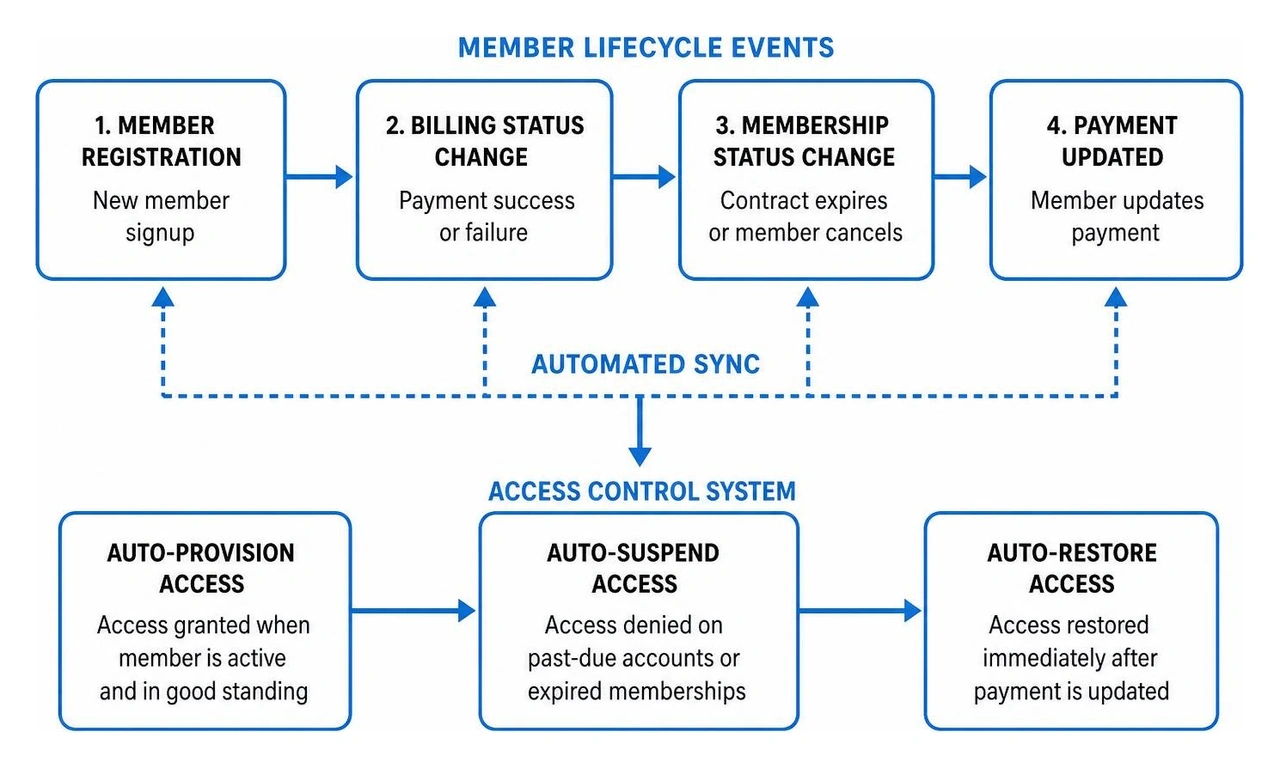
This automated pipeline is essential for facilities offering secure 24-hour access solutions. It safeguards the building overnight and eliminates awkward payment confrontations at the front desk, directly optimizing facility check-in systems.
Eliminating Hidden Costs and Manual Credential Administration
Manual administration is an invisible expense that drains operational budgets.
Consider a multifamily fitness amenity or commercial club processing 30 member status updates (move-ins, move-outs, freezes, cancellations) each month. When staff must manually log into a separate access panel, locate the specific card record, adjust permissions, and verify the door controller, each event takes roughly 5 to 10 minutes.
Automating that workflow across 30 monthly events returns 2.5 to 10 productive staff hours every month. Instead of typing hex codes into a secondary panel, your team can focus on member retention, facility cleanliness, and driving new sales.
Automating user provisioning is one of the most effective strategies for maximizing staff efficiency across commercial clubs and multifamily communities.
Calculating the ROI: Labor Savings and Security Value
Calculating the return on investment for an electronic access control installation goes far beyond comparing hardware prices.
The primary financial return is driven by three distinct factors:
- Labor Reallocation and Extended Operating Hours: Installing automated access readers allows a facility to transition from a strictly staffed 12-hour schedule to an unstaffed or lightly staffed 24/7 model. Capturing members who work non-traditional shifts without adding second- or third-shift payroll directly expands your top-line revenue.
- Preventing Unauthorized Guests and Tailgating: Facilities relying on manual sign-in binders or generic keypad codes experience significant unauthorized use. Keypad codes are shared freely among non-paying friends. Individualized key fobs paired with automated audit logging hold users accountable and eliminate unpaid facility wear.
- Amenity Value and Rent Premiums: In multifamily real estate, modern fitness centers are primary revenue drivers. Industry survey data shows that more than 70% of renters are willing to pay higher rent for upgraded amenities, with over 70% willing to pay an additional $100 to $199 per month for high-quality shared facilities. Less than 5% express an unwillingness to pay more for premium assets.
Finally, maintaining verifiable access records reduces operational liability. Security best practices recommend keeping access logs on file for at least 12 months, with the most recent 3 months immediately accessible for review. If an incident or equipment damage occurs, owners can cross-reference camera footage with exact timestamped card scans, reinforcing robust security in sign-in systems.
Frequently Asked Questions About Gym Access Systems
How much do replacement key fobs cost for gym members?
Gyms typically charge members a replacement fee of $10 to $50 for a lost or damaged key fob. Because replacement credentials cost the facility between $1.50 and $4.00 per unit in bulk, this replacement policy covers administrative overhead and turns credential loss into a cost-neutral—or slightly revenue-positive—event.
Can physical key fobs work alongside mobile credentials?
Yes. Modern access control architecture supports hybrid deployments. Multi-technology readers can read traditional 125 kHz proximity signals, 13.56 MHz smart cards, and Bluetooth Low Energy (BLE) or NFC signals from smartphones simultaneously. This flexibility allows operators to issue durable physical fobs to members who prefer them while offering digital passes to mobile-first users.
Is a key fob system safe enough for unstaffed 24/7 gym access?
A key fob system is exceptionally safe for 24/7 unstaffed operations when paired with the proper architectural safeguards:
- Install commercial fail-secure electric strikes that remain locked from the outside during power outages while allowing immediate egress from inside.
- Pair readers with synchronized overhead security cameras to record entry events.
- Implement anti-passback rules within your management software to prevent a single card from being scanned twice in immediate succession.
- Include accessible emergency push-to-exit buttons and emergency pull stations that comply with local municipal building codes.
Conclusion
Evaluating your total investment in an access system requires looking past the base price of physical fobs. True cost efficiency comes from balancing durable hardware, streamlined installation, and an integrated management platform that handles billing and door access through a single screen.
At Club Systems, our integrated platform unites membership billing, member management, and 24/7 access control into a dependable ecosystem backed by real, US-based support. Discover how easy facility security can be by upgrading to integrated member check-in software built specifically for gym owners.
Tired of Struggling with Your Gym's Software?
Simplify your operations, save money, and get the support you need with Club Systems.