
The Definitive Guide to Comparing Gym Access Control Systems


How to Choose Gym Access Control That Fits Your Facility
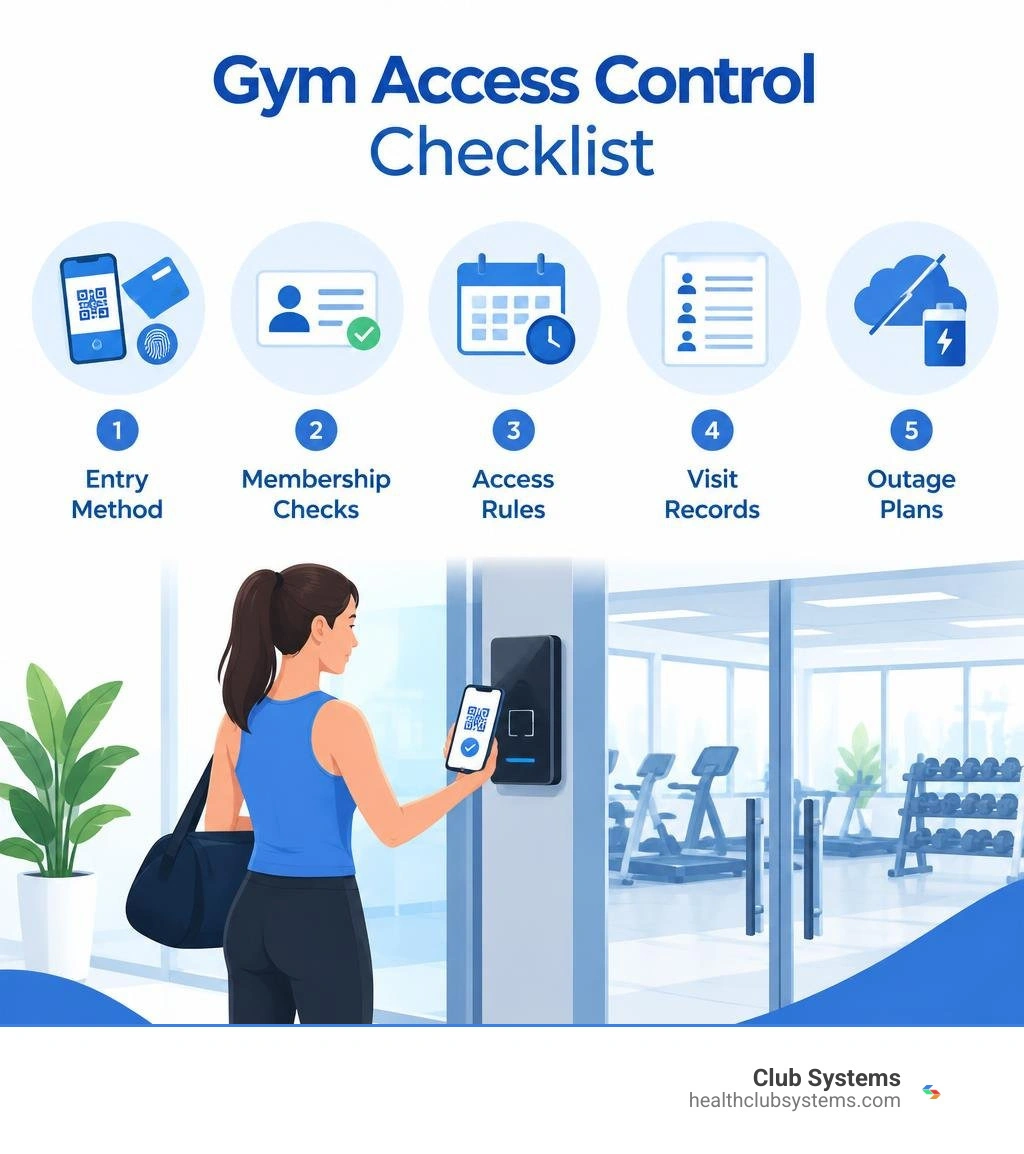
Gym access control lets you decide who can enter your facility, when they can enter, and which areas they can use. To compare systems, start with your entry method, such as keycards, mobile passes, or biometrics. Then check whether the system can verify active memberships, set access rules for staff and guests, and record visits. If you offer 24/7 access, ask what happens when the internet or power goes out.
The right setup can reduce unauthorized entry and front-desk work without making check-in harder for members. It should also fit your doors, your budget, and the software you use to manage memberships and payments.
I’m Eric A. Speer, owner and CEO of Club Systems. After nearly three decades working with gym management software and billing, I’ll help you compare gym access control options with the day-to-day needs of a fitness facility in mind.
Why Modern Facilities Require Gym Access Control
Running a fitness facility without an automated entry system is a bit like leaving your front door unlocked and hoping everyone who wanders in remembers to pay their monthly dues. In reality, fitness centers face persistent operational risks without dedicated physical security.
When an unmonitored door allows anyone to walk inside, you take on significant safety and liability hazards. The average cost of a security breach in a fitness facility is estimated at $25,000, factoring in stolen equipment, liability claims, property damage, and operational downtime. Beyond theft, there is direct revenue leakage from unpaid visitors using equipment, saunas, and showers.
Automating your doors solves these vulnerabilities while cutting front-desk bottlenecks. In fact, 68% of gym owners report that implementing electronic access control reduces unauthorized entry incidents by at least 50%. Understanding the importance of security in gym sign-in software allows you to safeguard your business assets while keeping members safe during workouts. In an emergency, such as a fire or sudden medical crisis, automated logs provide an accurate, real-time headcount for first responders. Exploring the benefits of using check-in software at your gym shows how verified entry protects your bottom line and improves overall member safety.
Preventing Tailgating and Membership Fraud
One of the oldest tricks in the gym book is buddy-passing: one member scans their barcode or keycard, grabs the door, and lets two friends sneak in behind them.
Modern access control prevents this through several built-in mechanisms:
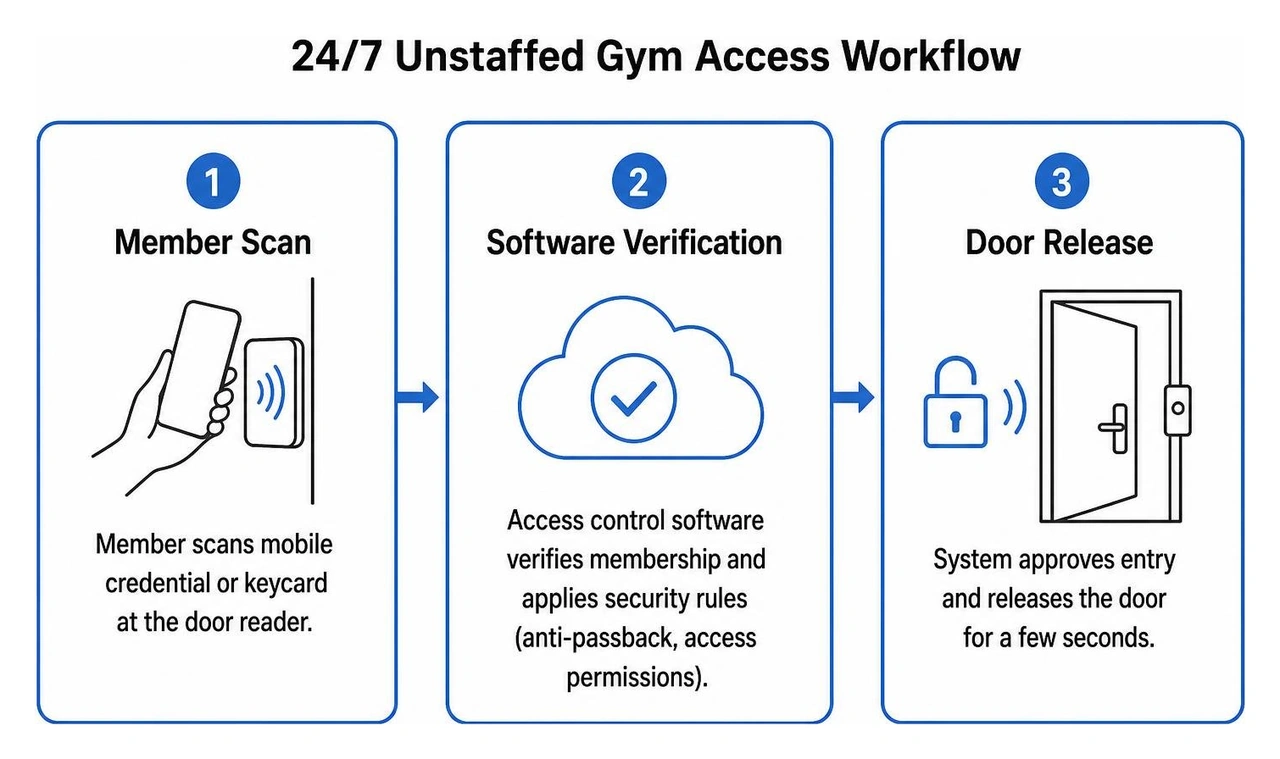
- Anti-Passback Rules: These logical software rules ensure a credential cannot be scanned twice in a row for entry without an exit scan in between. If a member scans in and hands their phone to a friend outside, the second scan triggers an immediate denial.
- Physical Turnstiles and Speed Gates: Waist-high tripod turnstiles or optical full-height speed gates physically restrict entry to a single person per successful credential scan.
- Magnetic Door Locks and Timed Relays: High-grade electromagnetic locks release for only a few seconds, preventing prolonged door holding.
- Integrated Video Verification: Overhead optical sensors and synchronized security cameras snap a timestamped photo during every scan, allowing management to spot mismatched users automatically.
By closing these loopholes, you eliminate membership fraud without burdening front-desk personnel with policing every visitor.
Streamlining 24/7 Unattended Operations
Offering 24-hour gym access has shifted from a niche perk to an industry standard. Members want to work out on their own schedules, whether at 5:00 AM before a shift or midnight after a late commute.
Operating an unstaffed facility requires reliable self-service security. Providing reliable 24-hour access means pairing smart door controllers with automated safety systems. This setup includes:
- Duress and Panic Alarms: Wall-mounted emergency buttons and wearable lanyards that directly notify local emergency services when pressed.
- Automated Lighting and Environmental Triggers: Sensors that illuminate zones as members enter and turn off unused areas to manage utility costs.
- Continuous Remote Visibility: Cloud-connected surveillance that ties entry logs to video feeds, protecting you against liability claims during unattended hours.
Comparing Entry Technologies: Keycards, Biometrics, and Mobile Credentials
Selecting the right credential type impacts member convenience, upfront hardware costs, and long-term security. The global access control market was valued at USD 9.6 billion in 2020 and is projected to reach USD 14.8 billion by 2027, driven largely by modern digital and touchless credentials.
| Entry Method | Security Level | Hardware & Ongoing Costs | Member Convenience | Hygiene & Maintenance |
|---|---|---|---|---|
| Barcode / QR Fobs | Low (easy to duplicate or share) | Low initial cost; ongoing replacement plastic costs | Moderate (bulky on keychains) | Contactless, low reader wear |
| RFID / Proximity Cards | Moderate (clonable without encryption) | Moderate hardware cost; card reorder fees | Moderate (requires physical card) | Contactless, minimal reader wear |
| Mobile Credentials (NFC / BLE) | High (biometrically locked on phone) | Low credential cost; modern reader hardware | High (instant access via phone) | Fully contactless, zero plastic waste |
| Fingerprint Biometrics | Very High (non-transferable) | Moderate to high reader cost; zero credential fees | High (no items to bring) | Physical contact required; needs cleaning |
| Facial / Palm Recognition | Maximum (cannot be shared) | Higher initial reader investment; zero credential fees | Highest (frictionless walkthrough) | Fully contactless, minimal maintenance |
For organizations evaluating credential architectures against strict technical baselines, the National Institute of Standards and Technology provides structured technical benchmarks in their Guidelines for the Use of PIV Credentials in Facility Access.
Mobile and Contactless Access Systems
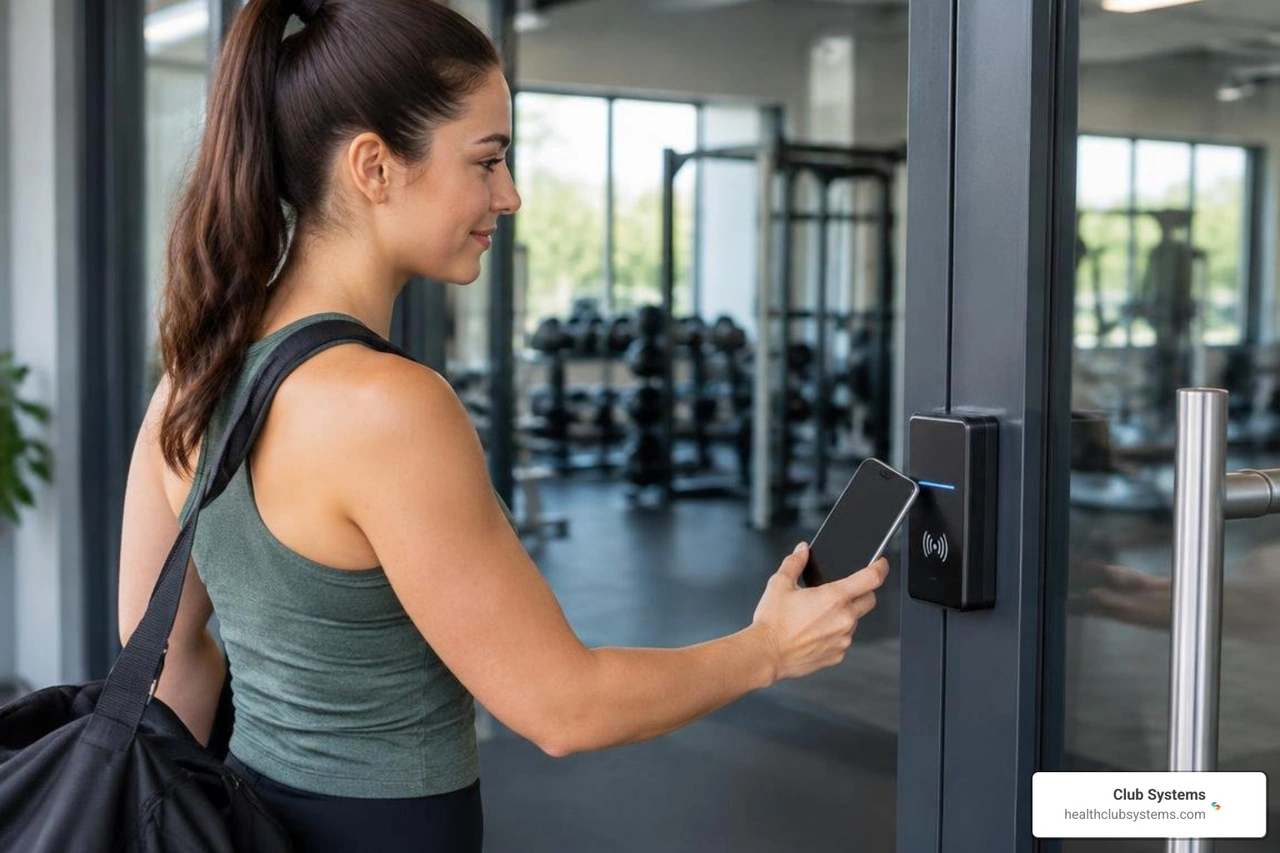
Mobile credentials turn every member’s smartphone into their gym key using Bluetooth Low Energy (BLE) or Near Field Communication (NFC). Members can save their digital membership card directly into Apple Wallet or Google Wallet, or open your gym's custom mobile application.
According to a 2022 industry report, 45% of gym members prefer using their smartphones for gym entry, and 72% of those members visit the gym more regularly as a result. Taking a behind-the-scenes look at how sign-in apps can change your gym dynamics shows that gyms adopting mobile access see an average 30% increase in member retention over physical cards. Members rarely leave their phones at home, which eliminates front-desk manual check-ins for forgotten fobs.
Biometric Verification Options
Biometric access control systems are expanding rapidly, projected to grow at a CAGR of 12.5% from 2021 to reach USD 12.4 billion by 2028. Biometrics link entry directly to physical traits, such as fingerprints, palm veins, or facial geometry, completely eliminating credential sharing.
Facilities that switch to biometric access report a 40% reduction in check-in processing times. Members walk up, scan, and step inside within seconds. When adopting biometrics, make sure your system complies with regional data privacy laws by encrypting biometric templates into algorithmic mathematical strings rather than storing raw photos or fingerprint images.
Essential System Integrations and Management Features
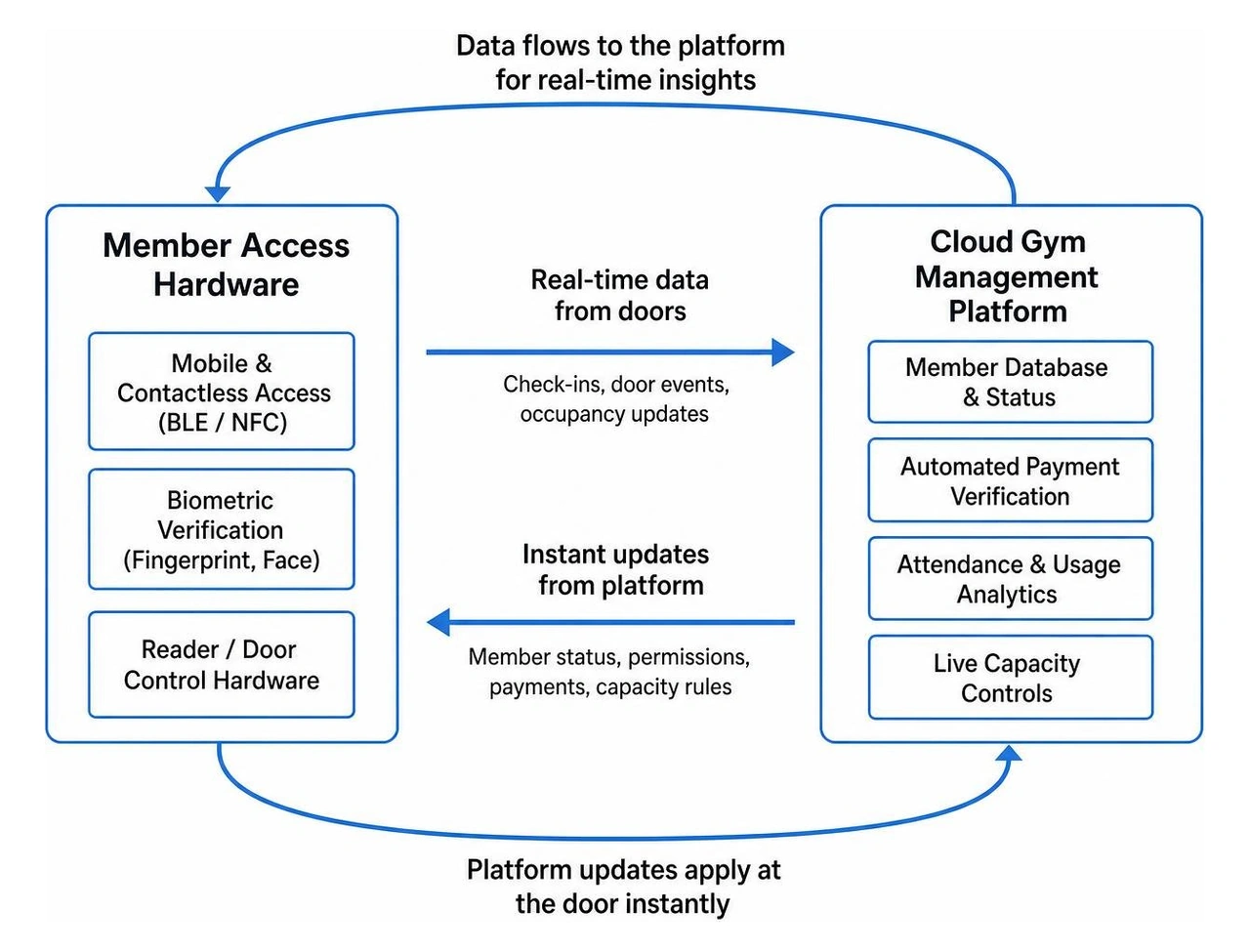
An access control system should not operate in an isolated silo. Connecting entry hardware directly with management software turns raw door relays into an automated administrative assistant. Evaluating the 3 features of modern check-in software for gyms ensures you select an integrated solution that supports real-time synchronization, front-desk alerts, and granular permissions.
Integrating Gym Access Control with Management Software
When your entry readers communicate with your central database, member status updates apply at the door instantly. A study found that 80% of gyms upgrading to cloud-based access systems saw a 20% increase in membership sales within six months thanks to improved operational speed and service delivery.
Key integration benefits include:
- Automated Payment Verification: If a member’s monthly dues fail or their card expires, the system denies entry at the door while displaying a clear, friendly alert on their app screen.
- Attendance and Usage Analytics: Real-time check-in logs help you track peak occupancy hours, allocate staff effectively, and identify at-risk members who have stopped attending before they cancel.
- Live Capacity Controls: Keep your facility within safe fire code regulations by tracking net occupancy automatically.
Focusing on optimizing your gyms check-in system helps cut front-desk bottlenecks and ensures your software suite handles member check-ins, automated billing, and scheduling smoothly.
Multi-Tiered Access for Members, Staff, and Guests
Not every door in your facility should open for every person. A comprehensive access engine lets you set role-based permissions across multiple zones:
- Tiered Member Access: Restrict specialized areas like executive locker rooms, saunas, tanning beds, or recovery lounges to members with active add-on packages.
- Staff and Contractor Permissions: Grant personal trainers, group instructors, and cleaning crews access only during their scheduled working shifts.
- Child Care and Kids' Club Zones: Secure child-care zones with strict access rules, ensuring only authorized guardians and vetted staff can enter.
- Class Attendees and Day Guests: Issue dynamic, time-limited QR codes or mobile passes that expire automatically after a scheduled class or trial window ends.
Implementation, Maintenance, and Security Best Practices
Installing access control hardware requires balancing physical durability, network reliability, and local safety codes.
When upgrading your setup, review how to improve front desk check-in at your health club to keep daily operations running smoothly during installation.
Budgeting the Total Cost of Gym Access Control
When calculating your return on investment, consider the full lifecycle costs:
- Hardware Upfront Costs: Door controllers, electromagnetic locks, motion sensors, turnstiles, and reader terminals.
- Professional Installation: Professional low-voltage wiring, network drops, and door hardware mounting.
- Software Licensing: Monthly cloud hosting, API integrations, and member management software fees.
- Credential Expenses: Recurring purchases of RFID cards or plastic fobs, versus the lower lifetime costs of mobile digital credentials.
Eliminating credential loss and reducing unstaffed front-desk labor often offsets these initial setup expenses within the first few quarters.
Maintenance and Long-Term System Upgrades
Keep your security hardware dependable with straightforward preventive maintenance:
- Battery and Power Backups: Equip every access controller with an uninterruptible power supply (UPS) and inspect backup batteries annually.
- Offline Mode Configuration: Choose door controllers that store valid member credentials in local controller memory, ensuring doors continue unlocking during internet outages.
- Firmware and Security Updates: Regularly update your controller hardware to patch security vulnerabilities and maintain communication with your cloud software.
- Hardware Inspections: Check magnetic lock alignment, door closers, and panic exit hardware every quarter to maintain clean latching and comply with local fire regulations.
Frequently Asked Questions About Gym Access Systems
What happens if the internet goes down at an unstaffed gym?
Modern access control systems use local memory caching within the door controller. If your gym loses internet connectivity, the controller continues verifying credentials and granting entry against its last-synced offline database. Once internet access is restored, the controller automatically uploads all offline check-in logs back to your main cloud database.
How do access control systems handle unpaid membership dues?
When integrated with your member management platform, the access control reader performs a real-time account status check during every scan. If an account is past due, the system denies entry, keeps the door locked, and sends a push notification prompting the member to update their payment details directly inside their member app.
Which access method is the most cost-effective for boutique fitness studios?
Mobile credentials and dynamic QR codes are the most cost-effective choices for boutique fitness studios. They eliminate the ongoing expense of purchasing, programming, and replacing plastic key fobs while delivering a modern, branded smartphone experience that members appreciate.
Conclusion
Gym access control does more than lock and unlock your doors. It secures your facility, prevents membership revenue loss, protects your business from liability, and gives members seamless entry at any time of day or night.
At Club Systems, we provide integrated management software designed specifically for health clubs and fitness studios. Our platform pairs 24/7 access control tools with reliable dues collection, cash-discount payment processing, and US-based customer support.
Ready to streamline your facility’s entry workflows? Learn how our modern member check-in solutions can secure your club and simplify daily operations.
Tired of Struggling with Your Gym's Software?
Simplify your operations, save money, and get the support you need with Club Systems.