
What Is an EFT Payment Method and When Should You Use One?


What Is an EFT Payment Method?
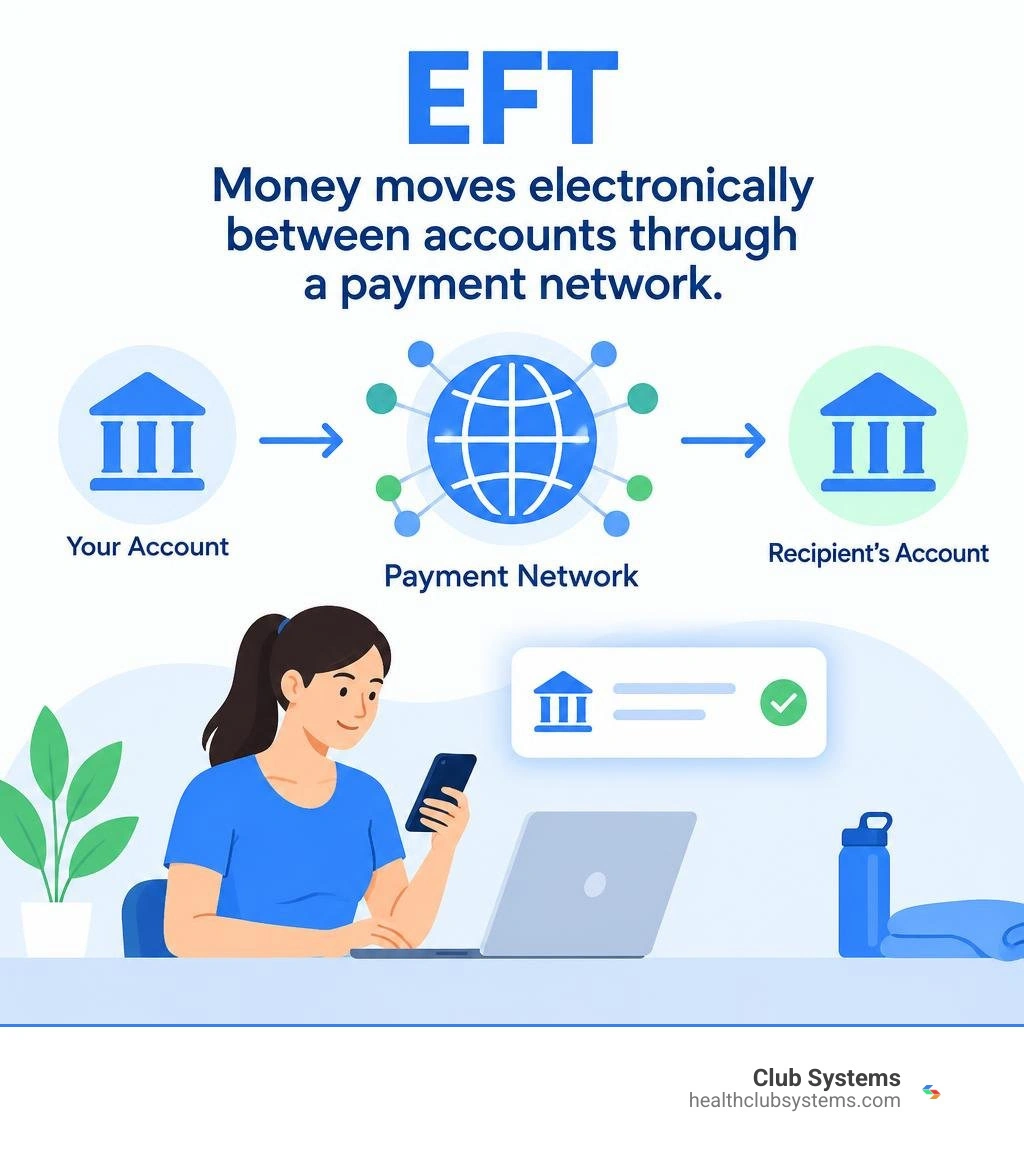
EFT stands for electronic funds transfer. It means moving money electronically rather than paying with cash or a paper check. EFT is a broad term: ACH bank payments, direct deposit, wire transfers, and card payments are all examples.
For a gym, EFT can make recurring membership dues easier to collect and payroll easier to send. The right type depends on how quickly the money needs to arrive, what it costs, and whether the payment repeats. Understanding the meaning of an EFT payment method helps fitness facility owners choose the right rail for each use case.
I'm Eric A. Speer, owner and CEO of Club Systems, where I've worked on gym software and billing since 1995. My experience with dues processing shapes how I explain eft payment method meaning to fitness facility owners.
Understanding the EFT Payment Method Meaning and How Transfers Work

To grasp the full picture of an EFT payment, it helps to view it not as a single tool, but as the master umbrella covering every digital financial movement across modern banking networks. Every time funds travel from one account to another without a physical check passing hands or physical paper changing pockets, an EFT has occurred.
Behind the scenes, major institutions handle staggering amounts of digital capital. For example, JPMorgan processes nearly $10 trillion in global payments daily across 160 countries and 120 currencies, and non-cash payment volumes across the globe continue to climb by roughly 9.5% each year. Whether a customer buys a smoothie at your front desk, a business distributes bi-weekly payroll, or an overseas supplier receives an equipment deposit, EFT rails carry the balance.
Step-by-Step Breakdown: The Operational Meaning of an EFT Payment Method
While an EFT feels immediate to the person tapping a screen or receiving a deposit, every transaction travels through six distinct stages to guarantee accuracy, regulatory compliance, and security.
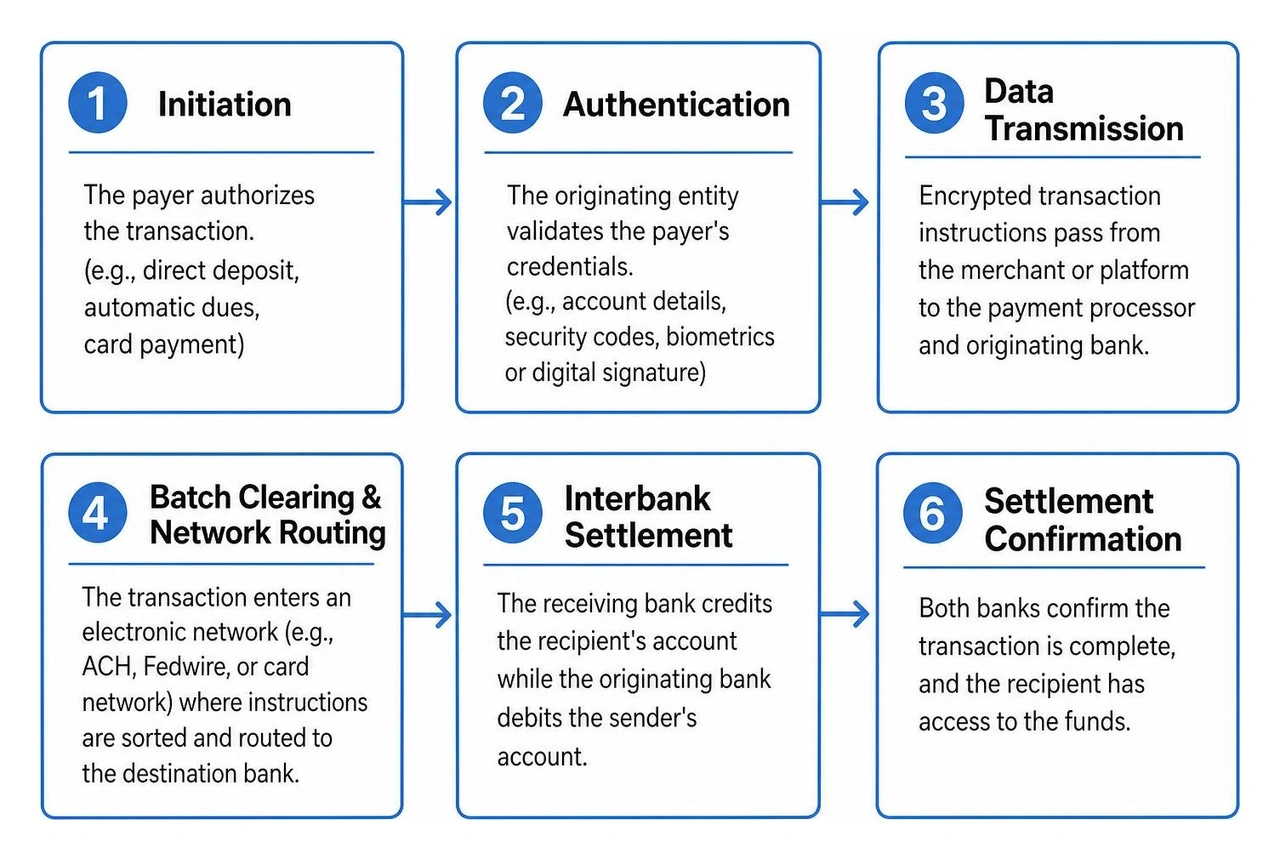
- Initiation: The payer authorizes the transaction. This occurs when an employee signs a direct deposit form, a member agrees to automatic monthly dues, or a buyer swipes a card at a point-of-sale terminal.
- Authentication: The originating entity validates the payer's credentials. This step checks account numbers, card security codes, biometric passkeys, or digital signatures to ensure the person authorizing the transfer actually owns the source funds.
- Data Transmission: Encrypted transaction instructions pass from the originating merchant or software platform to the payment processor and originating depository financial institution (ODFI).
- Batch Clearing & Network Routing: The transaction enters an electronic network—such as the Automated Clearing House (ACH), Fedwire, or a card network—where instructions are sorted and routed toward the destination bank.
- Interbank Settlement: The receiving depository financial institution (RDFI) credits the recipient's account while the ODFI debits the sender's account.
- Deposit Confirmation: Both financial institutions log the completed exchange, generating digital audit trails and updating balance sheets.
Essential Banking Information Required for Initiation
Executing an EFT requires accurate routing and account credentials. Providing incorrect details causes failed clearing cycles and administrative return fees.
- For Domestic Bank-to-Bank Transfers (ACH / Direct Deposit): You must provide the recipient's legal name, bank name, 9-digit routing transit number (ABA), checking or savings account number, and signed or digital authorization.
- For Domestic Point-of-Sale or Card Debits: You need the 16-digit primary account number (PAN), expiration date, CVV security code, and billing zip code.
- For International Transfers (Cross-Border Wires): Global transactions require the bank's SWIFT/BIC code, the recipient's International Bank Account Number (IBAN), full physical street addresses for both sender and recipient, and the designated transfer currency, as outlined by Wise.
Comparing Core EFT Types: ACH, Wire Transfers, and Card Networks
Because "EFT" represents an entire category, choosing the right method depends on balancing speed, cost, and transaction reversibility.
| Payment Method | Typical Processing Speed | Average Transaction Cost | Irrevocable? | Primary Business Use Cases |
|---|---|---|---|---|
| Standard ACH | 1 to 3 business days | $0.20 – $1.50 flat fee | No (reversible within rules) | Monthly subscriptions, vendor bills, payroll direct deposit |
| Same-Day ACH | Same business day | $1.00 – $2.00 flat fee | No | Expedited payroll corrections, time-sensitive supplier invoices |
| Domestic Wire Transfer | Real-time (under a few hours) | $15.00 – $35.00+ | Yes (immediate finality) | Real estate closings, major commercial equipment purchases |
| International Wire | 1 to 5 business days | $40.00 – $50.00+ | Yes | Overseas equipment orders, international vendor distribution |
| Real-Time Rails (FedNow / RTP) | Under 60 seconds (24/7/365) | Low per-transaction fee | Yes | Instant contractor payouts, emergency transfers |
| Point-of-Sale / Card Networks | Instant auth (1–2 days settlement) | 1.5% to 3.5% + swipe fee | No (subject to chargebacks) | In-person retail, walk-in sales, e-commerce checkouts |
| Paper Checks | 3 to 7+ business days | $2.00 – $4.00+ (labor & postage) | No (stop payment possible) | Legacy business payments, declining consumer transactions |
ACH Payments vs. Wire Transfers and Real-Time Rails
Understanding the distinction between ACH vs EFT payments is straightforward: all ACH payments are EFTs, but not all EFTs are ACH. ACH uses batch processing managed by Nacha, accumulating instructions and clearing them at specific intervals during business days. This batch model keeps per-transaction costs exceptionally low, making ACH the engine of choice for high-volume recurring dues and routine accounts payable.
By comparison, wire transfers through networks like Fedwire move money individually and in real time. Because wires provide immediate, irrevocable settlement, they command premium processing fees ($15 to $50 or more). A business wouldn't use a wire transfer to collect a $50 monthly membership fee, but it would use one to purchase a $40,000 commercial treadmill package where guaranteed settlement is mandatory before shipment.
Real-time payment rails like FedNow and The Clearing House's RTP network bridge this gap, settling transactions within seconds around the clock, giving businesses faster payment distribution without traditional wire fees.
Consumer and Point-of-Sale EFTs: Direct Deposit, Debit Cards, and eChecks
Beyond corporate bank transfers, everyday retail and consumer interactions rely heavily on specialized EFT mechanisms:
- Direct Deposit: Employers route wages directly into worker checking accounts, eliminating physical payroll checks and reducing administrative overhead.
- Electronic Checks (eChecks): A digital version of a paper check that routes through the ACH network using account and routing numbers printed at the bottom of a checkbook.
- Card Payments and eftpos: Point-of-sale transactions communicate across card schemes. In Australia, domestic eftpos handles direct bank debits through nearly 1 million merchant terminals. In 2025, 73% of Australian consumer transactions were completed via card rails (with debit representing 49%), while cash dropped to just 15%—down dramatically from 70% in 2007. Furthermore, 85% of debit cards in the region feature dual-network contactless capability, and device-based payments surged from 31% in 2022 to 40% by 2025.
- International and Instant Clearing: In regions like South Africa, EFT payments operate across national clearing switches like PayInc (formerly BankservAfrica), where standard EFT transfers settle in 1 to 3 business days, while Instant EFT layers allow instant bank-authenticated checkouts.
- Healthcare & Insurance Workflows: In clinical environments, healthcare EFT transactions deliver claim disbursements alongside Electronic Remittance Advice (ERA), dramatically shortening revenue collection windows compared to mailed reimbursement checks.
Strategic Business Benefits: Automation, Recurring Billing, and Cash Flow
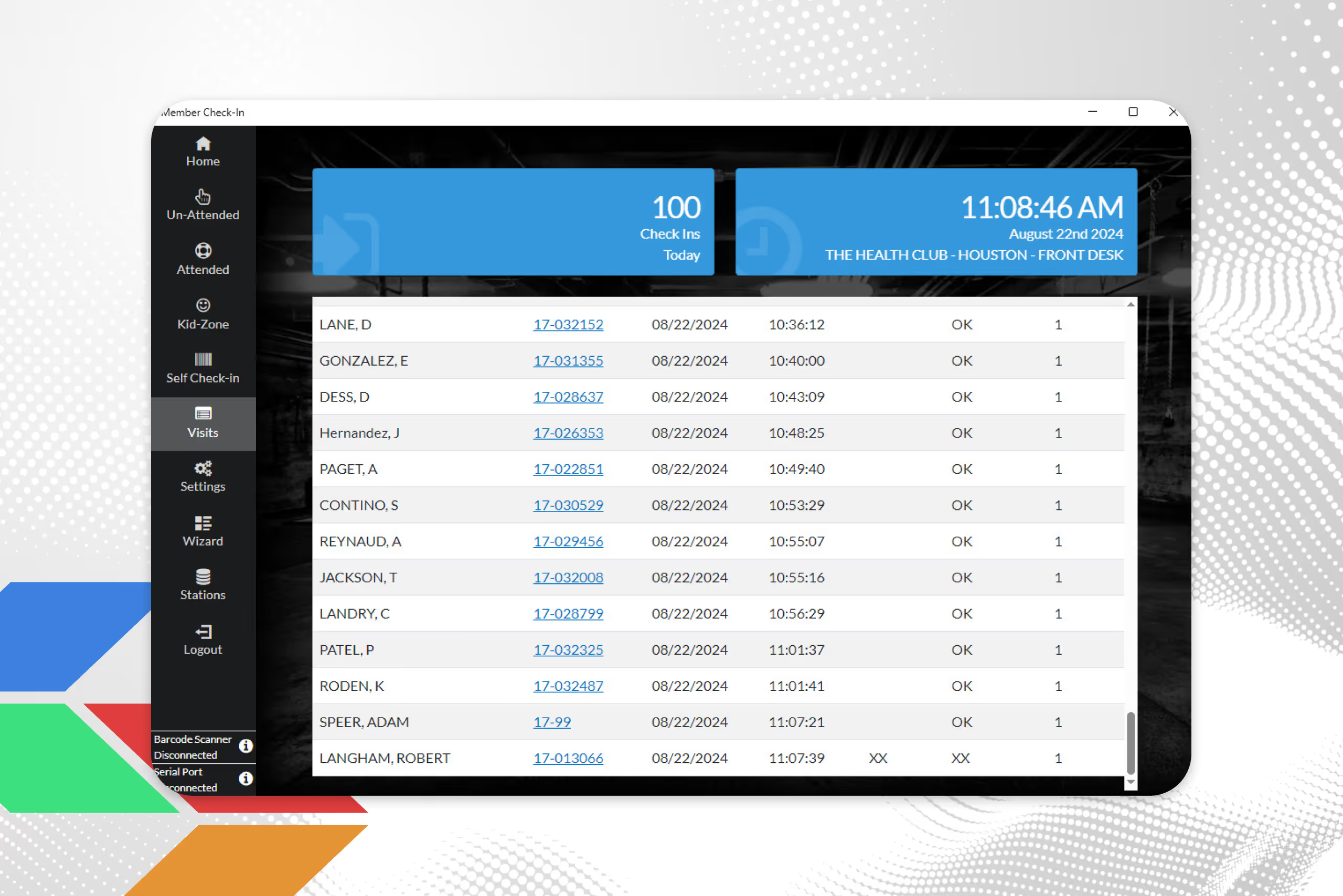
Transitioning to automated digital billing transforms routine financial operations. When organizations modernize their receivable architecture using dues processing tools, they eliminate hours spent manually preparing invoices, depositing paper checks, and chasing delinquent accounts.
The Practical EFT Payment Method Meaning for Recurring Billing
For any subscription-based enterprise, recurring bank debits form the foundation of predictable revenue. Setting up recurring EFT allows you to draw dues directly from customer accounts on pre-scheduled dates. This automation stabilizes monthly cash flow and removes friction for members who prefer "set-it-and-forget-it" payments.
However, card expirations, lost wallets, and bank changes can disrupt automated schedules. Deploying an account updater automatically refreshes stored card records behind the scenes when issuing banks reissue credentials, preventing involuntary churn before it happens. To make the most of these systems, facility managers often study what gym owners need to know about EFT payments to structure seamless member onboarding.
Reducing Overhead and Minimizing Delinquencies
Relying on manual payments or physical checks exposes businesses to missed collection cycles. When a payment fails due to non-sufficient funds or a temporary freeze, automated retry logic can re-attempt processing without awkward front-desk confrontations.
When accounts remain past due, structured collections procedures help recover revenue while preserving customer goodwill. Understanding 3 ways to avoiding missed payments from gym members ensures your team captures dues consistently while maintaining an exceptional customer experience.
Regulatory Compliance, Security Standards, and Fraud Prevention
Because digital payments transmit sensitive financial data, strict state and federal mandates govern how organizations originate, handle, and store payment details. Regulatory frameworks such as the CDTFA EFT requirements outline exact cutoff times, settlement requirements, and compliance rules for business tax remittances, illustrating how pervasive electronic standards are across commercial operations.
Legal Governance: Regulation E and Nacha Operating Guidelines
In the United States, consumer electronic transfers fall under the Electronic Fund Transfer Act (EFTA), implemented by the Federal Reserve's Regulation E. Key provisions include:
- Consumer Liability Protections: Limiting customer liability for unauthorized transfers if reported within established time windows (typically within 60 days of the transmittal statement).
- Pre-Authorized Transfer Disclosures: Requiring written or verifiable digital consent before establishing recurring debit schedules.
- Error-Resolution Procedures: Imposing strict timelines on financial institutions to investigate and rectify disputed electronic deductions.
For business-to-business and consumer ACH transactions alike, Nacha Operating Rules establish technical specifications, return codes, exposure limits, and authorization retention rules that every participating merchant must follow.
Advanced Payment Protection: Encryption, Tokenization, and Dual Control
Securing EFT infrastructure requires a defense-in-depth security posture:
- End-to-End Encryption: Financial data is scrambled using modern cryptographic protocols (such as TLS 1.3 and AES-256) while in transit across public and private networks.
- Tokenization: Sensitive bank account and credit card numbers are replaced with non-sensitive alphanumeric tokens within your software databases, ensuring stored data is useless if compromised.
- PCI DSS Compliance: Adhering to the Payment Card Industry Data Security Standards ensures secure cardholder data environments across all POS terminals and web checkouts.
- Dual Authorization: Large enterprise wire and ACH disbursements often require two-person verification—one team member initiates the batch, while a second officer confirms and releases it.
- ACH Debit Blocks: Organizations can configure their commercial bank accounts with specific ACH Originator IDs, preventing unauthorized entities from initiating fraudulent pull requests.
Frequently Asked Questions About EFT Payments
What is the primary difference between EFT and ACH payments?
EFT is the overarching category that describes any paperless movement of money via digital networks. ACH is one specific, highly regulated payment rail within that EFT category. While all ACH payments are EFTs, EFT also includes wire transfers, debit card swipes, ATM withdrawals, and real-time payments.
How long do different EFT payment methods take to clear?
Clearing timelines depend entirely on the underlying rail:
- Standard ACH: 1 to 3 business days.
- Same-Day ACH: Settles on the same day if submitted before designated Nacha cutoff windows.
- Domestic Wires: Same day, typically settling within 1 to 3 hours.
- Real-Time Networks (FedNow / RTP): Immediate clearance in under 60 seconds, 24/7/365.
- International Wires (SWIFT): 1 to 5 business days, depending on intermediary correspondent banks.
How do EFT payments compare to traditional paper checks?
EFT payments are significantly faster, less expensive to process, and far more secure than physical paper checks. Paper checks require manual sorting, envelope stuffing, postage, physical transport, and manual bank deposits—costing businesses several dollars per check in labor and fees. Furthermore, paper checks expose your bank account and routing numbers to anyone handling the paper, making them the payment method most vulnerable to check-washing fraud and tampering.
Conclusion
Understanding modern payment infrastructure is essential for running a profitable, resilient business. Transitioning receivables from manual check handling to automated electronic processing cuts processing costs, protects customer data, and creates predictable cash flow month after month.
At Club Systems, our integrated gym management software equips fitness facility owners with high-collection-rate dues processing, recurring EFT automation, cash-discount credit card processing, and dedicated US-based, real-person support. Discover what gym owners need to know about EFT payments and explore how modernizing your billing operations can elevate your bottom line.
Tired of Struggling with Your Gym's Software?
Simplify your operations, save money, and get the support you need with Club Systems.