
Everything You Need to Know Before Installing Keyless Gym Entry Locks


How to Set Up a Secure 24-Hour Gym Access System
To set up a 24 hour gym access system, choose a keyless lock and a way for members to enter, such as a fob or phone. Connect access to membership status so expired accounts cannot unlock the door. Before opening unstaffed hours, test the door during power and internet outages, check local safety rules, and give members clear entry and emergency instructions.
Done well, 24-hour access gives members more freedom without leaving entry to chance. The key is to plan for both the usual check-in and the moments when something goes wrong.
I'm Eric A. Speer, owner and CEO of Club Systems. Nearly three decades working with gym management and billing tools have shaped how I assess a 24 hour gym access system: it needs to work for members and be manageable for owners.
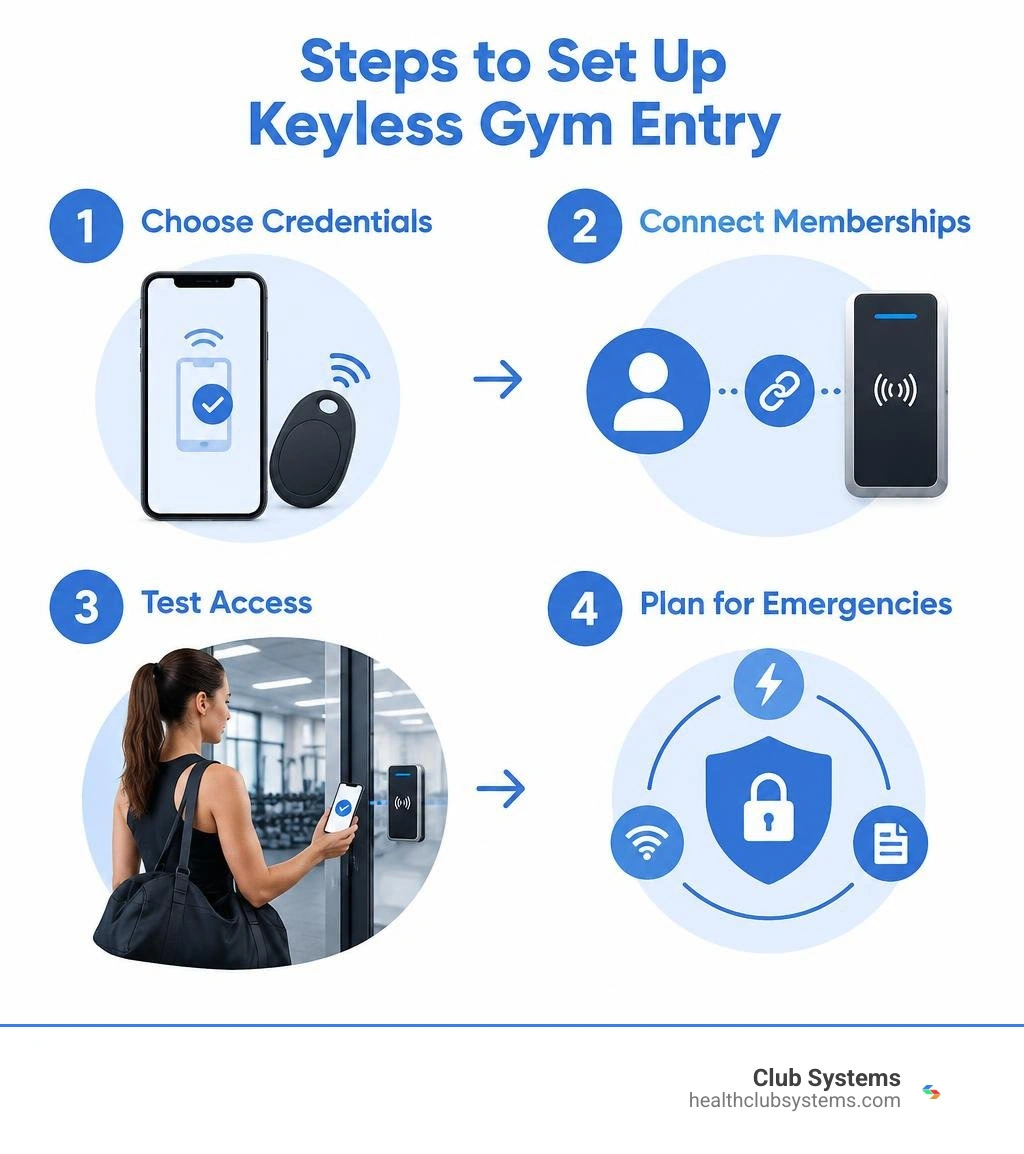
Modern fitness consumers demand unprecedented flexibility. As of November 2026, the global 24-hour fitness market continues its rapid expansion at an 8.5% compound annual growth rate. Over 60% of gym members actively prefer facilities with round-the-clock entry, naming demanding work shifts, irregular schedules, and daily convenience as top priorities. Notably, roughly 40% of all visits to 24-hour facilities take place during off-peak windows between 10 PM and 6 AM.
Offering round-the-clock availability allows operators to unlock substantial new revenue streams, reduce front-desk labor overhead, and boost member retention by 20% to 30%. However, keeping doors open around the clock without on-site staff introduces real operational concerns: preventing unauthorized guests, safeguarding lone exercisers, and ensuring hardware works reliably during power or internet interruptions.
Transitioning smoothly to an unattended model requires a clear understanding of the hardware, software, and safety protocols that drive a modern keyless setup.
Core Components of a 24 Hour Gym Access System
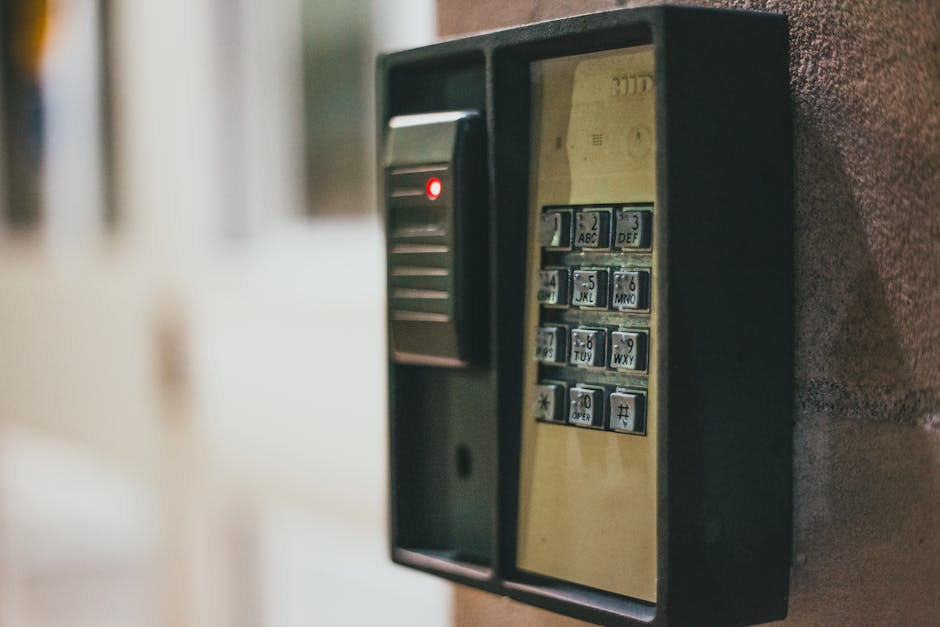
A dependable 24-hour setup relies on commercial-grade hardware engineered to withstand continuous physical use while communicating instantly with cloud-based management databases.
At its foundation, a dedicated 24-hour access system consists of several integrated hardware layers:
- Locking Mechanisms: Commercial entryways utilize heavy-duty electronic locks. Magnetic locks (maglocks) use continuous electromagnetic force (typically 600 to 1,200 lbs of holding force) to secure glass or heavy aluminum doors, while electric strikes replace standard mechanical door jambs to control latch engagement electronically.
- Door Controllers: The intelligent controller acts as the local brain. Mounted securely in an IT or utility closet, the controller processes signal transmissions from exterior readers, confirms entry permissions against cached data, and fires the electronic relay to open the door.
- Power Supplies and Battery Backups: Regulated power supply units convert line voltage into steady 12V or 24V low-voltage direct current. Crucially, sealed lead-acid or lithium backup batteries keep controllers and strike locks operational during unexpected power blackouts.
- Cloud-Connected Readers and Peripherals: External readers communicate credential data to the controller via standard communication protocols (such as Wiegand or OSDP), verifying access in fractions of a second.
Key Fobs, Barcodes, and Biometrics
Choosing the right physical credential involves balancing member convenience, upfront hardware costs, and long-term credential management:
- RFID Key Fobs: Radio-frequency identification fobs attach directly to keychains. They are durable, waterproof, and simple to assign at point of sale. Because they use unique encrypted serial numbers, replacing a lost fob takes seconds without rekeying physical locks.
- Barcode and QR Keytags: Standard printed cards and keytags are inexpensive to produce. While cost-effective, basic 1D barcodes can be easily photographed and shared, making them less secure for unstaffed hours unless paired with secondary security checks.
- Biometric Scanners: Fingerprint readers and facial recognition terminals evaluate physical identifiers that cannot be shared or stolen. Modern optical and infrared facial terminals identify authorized members instantly, even in low-light conditions, though they require higher upfront investment and strict privacy compliance.
- Backup Keypads: Weatherproof exterior PIN keypads provide an essential backup entry method for members who lose credentials or encounter temporary phone battery drainage.
Mobile Credentials and App-Based Entry
Mobile credentialing turns a member's smartphone into their primary key. Through dedicated Member Apps and intuitive interfaces like the Member Portal App, users tap or wave their devices near readers to gain access.
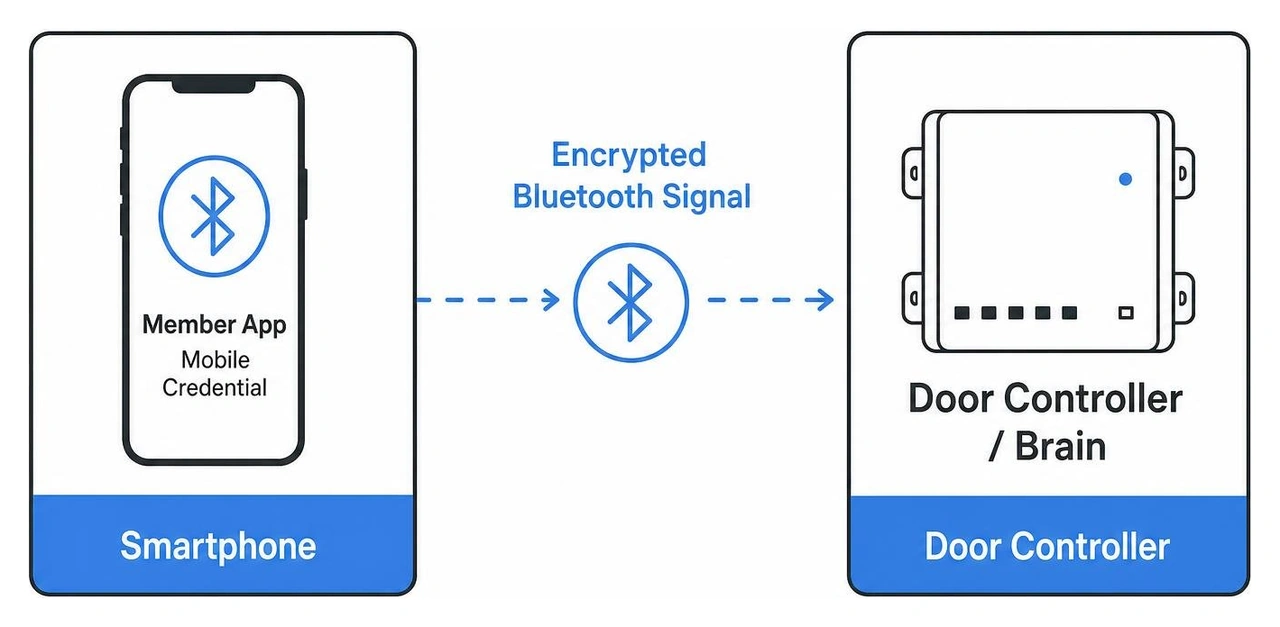
These systems use several complementary technologies:
- Bluetooth Low Energy (BLE): Allows readers to detect an authorized smartphone from several feet away, letting members enter without pulling their phones out of their pockets.
- Near-Field Communication (NFC): Works like contactless credit card payments; members tap their phone directly against the reader for secure, short-range transmission.
- Dynamic QR Codes: To stop members from texting screenshots of their entry codes to friends, modern apps generate rolling, time-sensitive QR codes that refresh every few seconds.
Moving away from physical cards yields measurable results: keyless entry systems for 24-hour gyms reduce unauthorized entry incidents by up to 50% compared to traditional key or magnetic stripe card systems.
Preventing Security Risks and Tailgating in Unstaffed Gyms
Operating an unattended facility requires continuous enforcement against tailgating—the practice of an unauthorized individual slipping in immediately behind a paying member. Maintaining strict physical perimeter security protects both your business revenue and your late-night exercisers.
Key physical and algorithmic defenses include:
- Anti-Passback Logic: Access control controllers enforce strict timing rules. Once a credential checks in at an exterior reader, the system disables that credential from unlocking the door again for a preset duration (e.g., 20 minutes), preventing members from reaching back through the door to badge in an unpaid friend.
- Optical Turnstiles and Speed Gates: High-traffic facilities rely on motorized waist-high or full-height security turnstiles. Infrared beam arrays detect when more than one person attempts to walk through on a single scan, triggering an audible alarm and capturing timestamped video.
- Security Vestibules (Mantraps): In these double-door airlock entryways, Door B will not unlock until Door A is fully closed and the user's credential has cleared authorization.
- Duress Stations and Panic Buttons: Strategically placing illuminated emergency pull stations, wall-mounted panic buttons, and direct-to-dispatcher landline intercoms ensures lone members can summon immediate police or medical assistance if an incident occurs.
Managing risk involves securing every layer of the check-in experience, as highlighted in our guide on the importance of security in gym sign-in software.
Video Surveillance and AI Monitoring for 24/7 Facilities
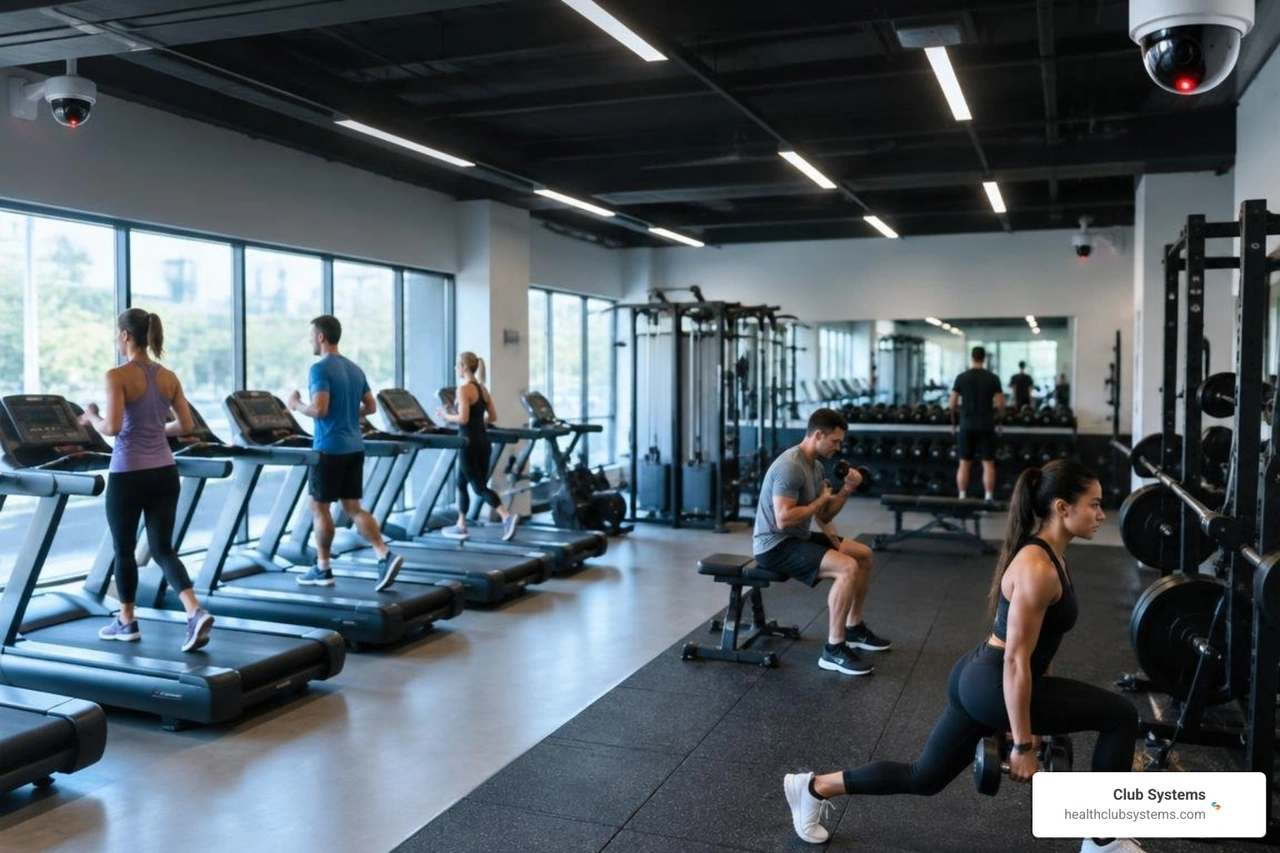
Modern security cameras have evolved beyond passive recording devices into proactive, intelligent monitoring systems.
High-definition, cloud-managed IP cameras integrate with automated visual validation tools like X Capture to take a real-time snapshot during every badge swipe, linking visual proof directly to the member's profile record.
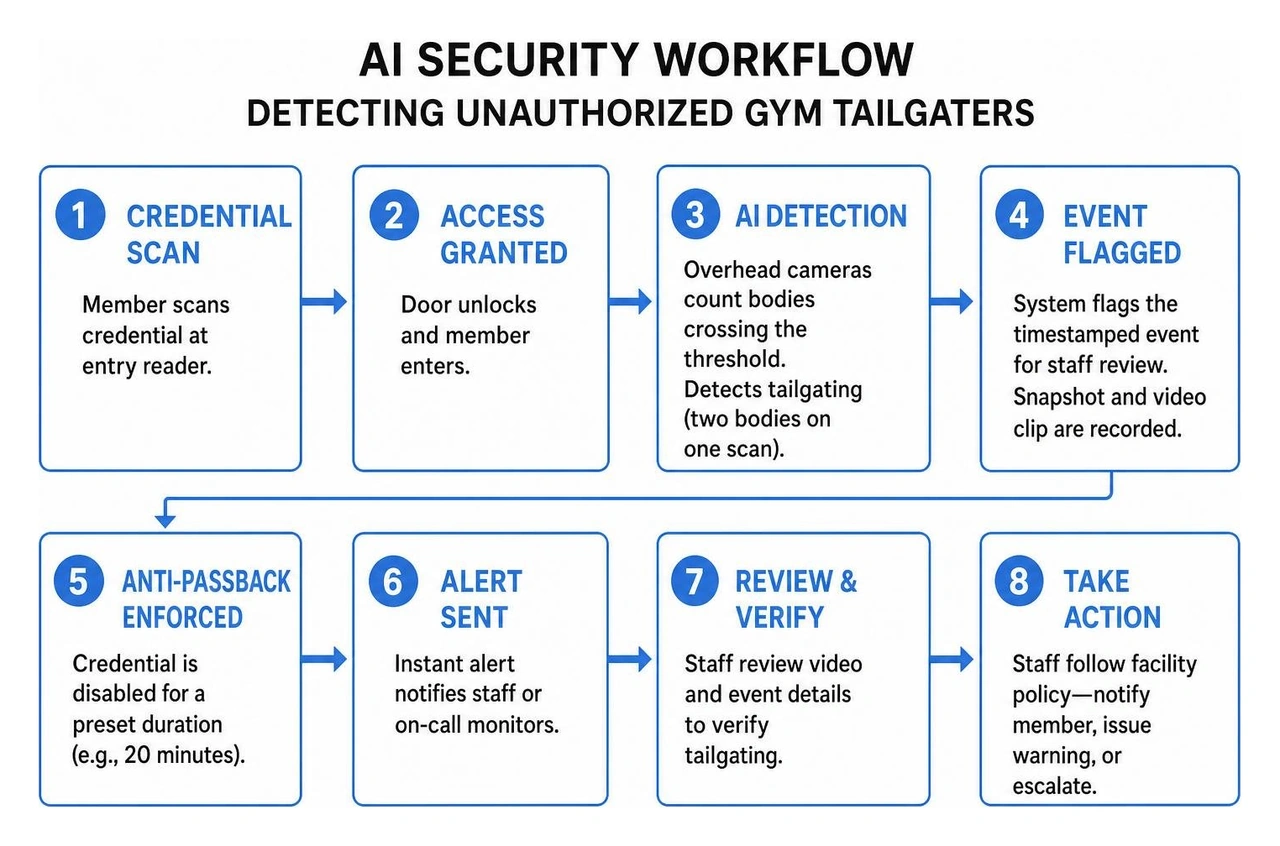
AI-assisted video analytics deliver continuous protection through:
- Tailgating and Occupancy Detection: Overhead stereo-vision cameras calculate human silhouettes entering the entryway. If two distinct bodies cross the threshold on a single scan, the system flags the timestamped event for staff review.
- Unusual Inactivity Alerts: AI algorithms detect human posture and motion patterns. If a member collapses or remains motionless on the floor for an extended period, the system can automatically notify on-call emergency monitors.
- Zone Intrusion: Gyms can set automated perimeter alerts around restricted storage rooms, staff offices, or closed pool areas during unstaffed hours.
Integrating Access Control with Gym Management Software
A smart lock is only as dependable as the database behind it. Running access control on a standalone system separate from your billing platform forces staff into manual data entry, creating errors and allowing unpaid accounts to access the facility.
A unified Software Suite links door hardware directly to member records, ensuring every entry request checks against live account standing.
| Feature / Metric | Standalone Smart Locks | Integrated Access Control System |
|---|---|---|
| Membership Synchronization | Manual data entry across multiple apps | Automated, real-time database sync |
| Past-Due Payment Handling | Manual lockout after discovering unpaid dues | Instant, automated door lockouts |
| Attendance Logging | Isolated lock logs with no billing context | Automatic check-ins tied to member profiles |
| Tailgating Prevention | None (unlocks mechanically on demand) | Anti-passback, AI camera pairing, automated flags |
| Administrative Overhead | High (frequent audits and manual credential entry) | Minimal (hands-off automated lifecycle updates) |
| Offline Reliability | Varies widely by consumer device | Commercial controllers cache local permissions |
Automated Membership Verification and Dues Processing
Integrated door controls eliminate payment collection headaches. When a member's monthly credit card charge fails, the system immediately suspends after-hours door access while sending an automated SMS notification with a secure payment link.
Connecting door security directly with Dues Processing and automated Recurring EFT billing creates a reliable operational workflow:
- Instant Gatekeeping: Accounts that are frozen, canceled, or past-due cannot unlock the door during unstaffed hours.
- Card Updates: Integration with automated Account Updater tools refreshes expired or re-issued credit cards behind the scenes, preventing accidental lockouts caused by routine bank card replacements.
- Automated Recovery: Delinquent accounts transition automatically into recovery workflows managed through built-in Collections tools, restoring access the moment balances clear.
Tracking Attendance and Facility Utilization
Every scan at the door doubles as a verified check-in, populating operational dashboards without front-desk intervention.
Reviewing automated check-in trends through Reports and Statistics reveals valuable operational insights:
- Accurate Capacity Management: Monitor real-time occupancy to avoid exceeding local fire code limits.
- Optimized Staffing and Maintenance Schedules: Identify quiet off-peak hours to schedule deep floor cleaning, equipment servicing, and preventative maintenance without disrupting member workouts.
- Targeted Re-Engagement: Track attendance patterns to find inactive members who haven't scanned in for several weeks, then send automatic encouragement sequences through integrated CRM and SMS tools.
Implementation Best Practices for Your 24-Hour Gym Access System
Transitioning to a 24-hour gym access system requires careful planning across physical installation, municipal safety compliance, and member education.
Key technical and physical installation steps include:
- Fire Code and Life Safety Compliance: All magnetic locks must integrate with the building's central fire alarm control panel (FACP). If a fire alarm sounds, the controller must immediately cut power to all maglocks (fail-safe mode), allowing occupants to exit freely through every doorway.
- Emergency Egress Hardware: Install passive infrared (PIR) request-to-exit motion detectors above exit doors, backed by illuminated, pneumatic push-to-exit buttons wired directly in series with the lock power circuit.
- ADA Accessibility: Exterior card readers, intercom call buttons, and push pads must be mounted within ADA-compliant reach ranges (between 34 and 48 inches above the finished floor level).
- Network and Offline Resilience: Ensure local controllers feature offline memory storage. If your local internet service drops, the controller must continue granting entry to active members using its internal database cache.
For more insights on upgrading entry hardware and streamlining flow, review our breakdown on optimizing your gym's check-in system.
Member Onboarding and Safety Protocols for 24-Hour Access
Unattended facilities rely on clear member communication. Every person who steps through your doors after hours should understand basic safety guidelines and their personal responsibilities.
- Digital Liability Waivers: Require members to sign after-hours safety agreements via your Website Portal. These agreements should explain unstaffed rules, prohibit guest tailgating, outline surveillance policies, and confirm the member's understanding of emergency equipment.
- Orientation and Onboarding: Use automated onboarding messages to explain how to scan in after hours, highlight emergency button locations, and locate medical equipment. Maintaining open communication through tools that help you easily contact members builds a culture of safety.
- Accessible Emergency Gear: Place automated external defibrillators (AEDs) and commercial first-aid kits in clearly visible, unlocked central locations. Prominently display your physical street address above emergency phones so members can easily tell emergency dispatchers where they are.
Tailoring 24/7 Access to Studio and Club Types
Every gym has unique operational requirements. A single entry setup will not fit every business model.
- Boutique Fitness Studios: Studios offering booked sessions, spin, or yoga can use smart locks that grant entry only 20 minutes before a scheduled class starts, keeping spaces secure between sessions. Integrating access with Personal Training and Classes makes scheduling and room access work together effortlessly.
- CrossFit Boxes and Functional Fitness Gyms: Facilities balancing open-gym hours with structured group workouts can restrict access to specific zones—such as weight lifting bays—during unstaffed hours, as detailed in our guide on CrossFit gym management software.
- Large Commercial Health Clubs: Multi-room athletic clubs often keep cardio and strength floors open 24/7 while locking down pools, saunas, tanning beds, and child watch centers using interior access-controlled doors.
Managing Boutique Studios and Multi-Location Chains
Multi-location gym networks require centralized, enterprise-level credential management.
Using scalable software Integrations lets owners manage multi-tier memberships easily:
- Multi-Location Privileges: A member registered at Location A can automatically unlock doors at Location B and Location C without having to register a new fob or download another app.
- Zone and Tier Permissions: Automatically restrict access based on membership tiers. General members can unlock the front doors, while VIP members get access to private recovery zones, hydro-massage rooms, or premium turf areas.
- Centralized Dashboard: Track attendance trends, review security alerts, and revoke credentials across all your locations from a single administrative dashboard.
Frequently Asked Questions About 24-Hour Gym Access Systems
How does a 24-hour gym access system prevent non-members from sneaking in?
Integrated access systems prevent unauthorized entry through anti-passback logic, automated tailgating detection cameras, and physical barriers like turnstiles or airlocks. When a member scans their credential, the system locks that identifier against repeated use for a set period. Paired with AI surveillance and automatic account flagging, gyms can easily identify and penalize members who sneak in unregistered guests.
What happens if the internet goes down at an unstaffed gym?
Commercial door controllers store valid member credentials and access permissions in local memory (offline caching). If your internet connection drops, the controller continues validating member scans and unlocking doors locally. Once connectivity returns, the controller syncs all stored check-in timestamps back to the central management database.
What are the primary insurance requirements for operating an unstaffed gym?
Underwriters typically require complete digital check-in records, continuous high-definition video surveillance covering all workout zones (excluding locker rooms and restrooms), accessible and regularly inspected AED units, illuminated panic or duress buttons, and up-to-date digital liability waivers signed by all active members.
Conclusion
Expanding into round-the-clock fitness meets modern consumer demand, improves retention rates, and keeps your facility competitive in an evolving market. Upgrading to a 24-hour gym access system lets you grow your revenue while keeping overhead and manual administration low.
At Club Systems, we combine powerful gym management software, comprehensive dues processing, and dependable 24/7 access control tools—backed by dedicated, US-based support from real people who know the fitness industry.
Ready to streamline your entry doors and protect your business? Take the next step and upgrade your club with integrated member check-in.
Tired of Struggling with Your Gym's Software?
Simplify your operations, save money, and get the support you need with Club Systems.